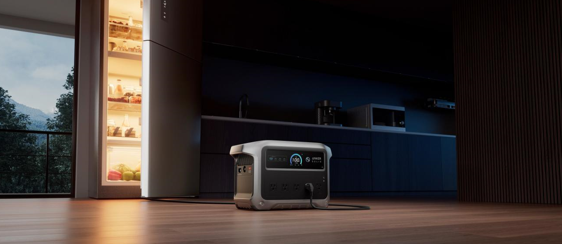
Understanding the output of portable solar generators is crucial. Watts and watt-hours are the key specifications determining what you can power and for how long. Watts indicate the power output capability, while watt-hours show energy capacity or runtime. Grasping these metrics will help you choose the right solar generator for your needs, whether it’s camping, emergency backup, or home use. With options like the Anker SOLIX C1000 Gen 2, which offers a robust 2,000W output and a 1,024Wh capacity, it’s clear that selecting the right generator involves more than just a single number. Let’s dive into the details to make sense of your portable solar power options.
What Watts and Watt-Hours Really Mean?
When evaluating solar generators, you encounter two fundamental terms: watts and watt-hours. Watts measure the power output, telling you how many devices you can run simultaneously. Watt-hours reflect energy capacity, indicating how long your devices will stay powered. Knowing these helps you select the right generator for your requirements.
Watts (Power Output) Explained
Watts measure the flow of electricity—a crucial concept in understanding generator capability. Simply put, watts quantify how much power a generator can deliver instantaneously. For instance, if a generator is rated at 2,000 watts, like the Anker SOLIX C1000 Gen 2, it can supply up to 2,000 watts of power at any given moment. This means you can power devices up to this wattage without overstressing the unit. Consider watts as the measure of performance, revealing the maximum load your generator can handle. Multiple devices can be run simultaneously, provided their combined wattage doesn’t exceed the generator’s limit. This measure is fundamental for determining the kind of appliances and electronics you can support daily with solar power.
Watt-Hours (Energy Capacity) Explained
Watt-hours, on the other hand, measure the energy stored in a generator, akin to the size of a fuel tank. If your generator boasts a capacity of 1,024Wh, as seen in the Anker SOLIX C1000 Gen 2, it signifies how much energy the generator holds ready for use. This metric indicates how long you can power devices on a single charge. If a device consumes 500 watts, the generator will power it for about two hours with a 1,000Wh capacity, providing calculations for real-time use. Watt-hours gauge duration is vital for planning energy use over time. They assist users in assessing whether they can sustain energy needs during outings or power outages effectively.
How Watts and Watt-Hours Work Together?
In the practical world, watts and watt-hours interact to define a generator’s overall capability. Watts show the limits in power output while watt-hours determine duration. Together, they dictate how much you can do and for how long.
Real-World Examples of Output vs Capacity
Take a portable fridge as an example. If it requires 100 watts per hour, a generator with 2,000W output and 1,024Wh capacity, such as Anker SOLIX C1000 Gen 2, can run it for approximately 10 hours. The wattage tells you if the generator can handle the load, while the watt-hours reveal how long the power will last. This interplay is critical for planning activities like camping, where knowing both the device requirements and the generator outputs ensures continuous power.
Surge Watts vs Continuous Watts
The portable solar generators often mention surge watts apart from continuous watts. Surge watts represent the generator’s ability to handle temporary spike demands—critical for devices that require high startup power like refrigerators. Continuous watts indicate the steady power level the generator can maintain. For instance, a 2,000W generator might support a 3,000W surge for short durations, effectively managing surges without tripping. Understanding both terms ensures the right generator choice, avoiding failures during peak demand times for essential appliances.
How to Choose Based on Your Needs?
Choosing a generator hinges on discerning your specific needs. Recognizing the required wattage for devices and the necessary operational duration is key. Balance power and capacity to fit your lifestyle or emergency use.
Sizing for Camping and Outdoor Activities
For outdoor activities, focus on lightweight, efficient generators. Estimate the watt needs from devices like portable lights, mini fridges, or phones. A generator like Anker SOLIX C1000 Gen 2, with 2,000W output, can power multiple devices seamlessly. Look for watt-hours if duration is crucial — the 1,024Wh capacity lets you stay powered during extended camping trips. Portability paired with sufficient capacity reassures continuous operation without excess weight. Choose wisely to enhance your outdoor experience without worries about running out of power mid-activity.
See also: What Are ADC Services and Why Are They Crucial for Biotech?
Sizing for Home Backup
Home backup requires a thorough evaluation of critical appliances and their wattage use. Ensure the chosen generator can handle essentials like refrigerators, lights, and communication devices during outages. A robust option like Anker SOLIX C1000 Gen 2, offering 2,000W and 3,000W peak capacity, can manage several appliances simultaneously. Confirm watt-hour needs, too, particularly during extended blackouts. Assess typical usage and opt for generators that can sustain home operations for hours or days, providing secure power when conventional means fail.
Conclusion
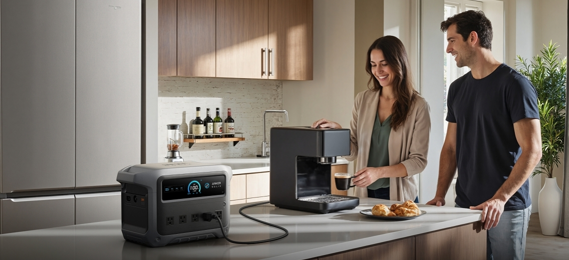
Understanding the distinction between watts and watt-hours empowers you to make informed choices about solar generators. With this knowledge, you’re better equipped to evaluate models like the Anker SOLIX C1000 Gen 2, ensuring they meet your power and duration requirements. Reflect on your needs, whether for outdoor adventures or home emergency preparedness, and match them with generator specs effectively. Recognizing how these units operate optimizes your device performance and prolongs energy use. Turn this knowledge into power decisions that support your lifestyle and security seamlessly, ensuring devices are energized precisely as needed.


