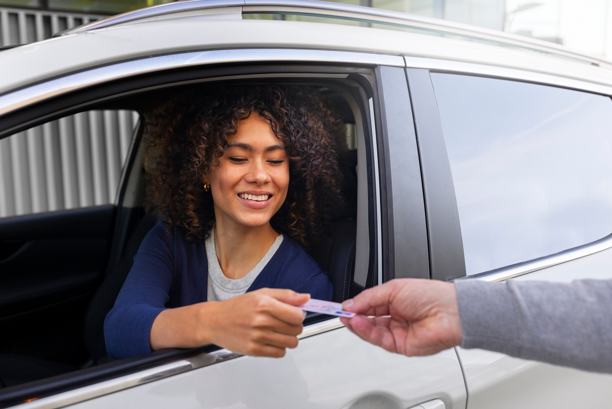
Scannable Commercial Driver’s Licenses (CDLs) use integrated technology (such as barcodes, QR codes, RFID, or NFC) to instantly share driver credentials, verify endorsements, and grant secure access to transportation facilities.
Detecting fake Commercial Driver’s Licenses prevents cargo theft, insurance fraud, unqualified hiring, regulatory penalties, and major safety risks on the road.
Key Takeaways:
- Modern Commercial Driver’s Licenses use integrated technology (like barcodes, QR codes, RFID, and NFC) to quickly verify driver credentials, endorsements, and employment eligibility
- Catching fake CDLs is essential for employers to prevent fraud, maintain DOT and FMCSA compliance, and avoid legal and financial liabilities
- To combat advanced AI-generated forgeries, employers in 2026 deploy multi-layered systems combining forensic scanning, biometric face-matching, and real-time CDL database validation for instant, seamless verification
To mitigate these escalating risks, modern businesses deploy automated, layered defense systems.
This guide will indicate the ways employers detect fake CDL in 2026 and ways to stay safe.
See also: Key Benefits of Using Horizontal Form Fill Seal Technology in Manufacturing
Why Fake CDL Detection Matters More In 2026
With counterfeit IDs now replicating holograms and scannable barcodes, relying on visual inspection alone is no longer sufficient.
In 2026, employers detect fake CDL license using a layered approach-
- Barcode and PDF417 data scanning
- UV light inspection
- AI-powered document forensics
- Biometric liveness checks
Using a fake CDL is considered forgery and fraud and may result in criminal penalties, employment disqualification, and regulatory violations.
Methods Employers Use To Detect Fake Commercial Driver’s Licenses In 2026
Employers that fail to verify fraudulent CDLs may face fines, compliance violations, insurance complications, and liability exposure.
Here are some of the methods employers use to detect fake CDL in 2026-
Barcode And PDF417 Data Scanning
The software decodes, parses, and cross-checks the encoded data against the printed information on the front of the ID to detect tampering, unreadable codes, and mismatched credentials.
Barcode scanning helps detects counterfeits through-
- Data consistency checks
- AI-powered identity verification and cryptographic signature checks
- Database verification
- Biometric and physical comparison
UV And Multi-Spectrum Light Inspection
Employers use UV and multi-spectrum light inspection to expose CDL security features like-
- Hidden ghost photos
- Microprint
- Reactive fluorescent inks
Business implementation and compliance are maintained with light verification assisted by AI software.
AI-Powered Document Forensics
AI-powered document forensics detects synthetic fake scannable ID cards and alterations by analyzing the physical and digital properties of the licenses.
The forensic pipeline works by-
- AI examining the digital payload of uploaded IDs
- Machine learning models scanning for abnormal texture patterns, cloned areas, and hidden manipulation layers
- AI comparing typography, layout, and spacing consistency
- Checking optical variable inks shift under simulated lighting
Biometric Liveness Detection
Employers combat fake scannable ID cards by pairing Optical Character Recognition (OCR) with biometric liveness detection.
The liveness and verification process works by-
- Document analysis
- Biometric face matching
Physical And Tactile Inspection
Physical and tactile inspection relies on feeling the CDL card’s material, weight, and raised textures.
Here are the key tactile and physical checkpoints that were inspected-
- Raised text and embossing
- Card flexibility and materials
- Edge quality
- Lamination and peeling
- Optically Variable Ink (OVI)
Modern employers combine physical checks with advanced technology such as multispectral scanners, CDL database integration, specialized lighting, and digital forensics.
| Verification Method | Forgery Vulnerability | 2026 Automated Solution |
| Visual Human Inspection | Misses high-quality replica holograms, microprint, and synthetic data | AI Document Forensics: Scans layout typography, pixel cloning, and OVI shifts under simulated light |
| Basic Barcode Scanners | Fooled by generic barcode generators that copy front-of-card text | AAMVA Parsing and Crypto Checks |
| Standard Flashlights | Cannot reveal deep UV-reactive inks or multi-spectrum ghost images | Multi-Spectrum Hardware: Automates light wavelength shifts to expose hidden security layers |
| Static Photo Uploads | Completely vulnerable to AI deepfakes, presentation attacks, and stolen images | Passive Biometric Liveness: Maps 3D facial topology in real time to ensure physical presence |
Table: Methods Businesses Use
Note: Reliable fake ID card makers are aware of these features and ensure that the fake scannable ID cards work just perfectly.
How Employers Stay Safe: CDL Verification Best Practices
Employers stay protected from fake CDL license in 2026 by combining technology with trained human judgment.
Here are some of the ways employers stay safe by detecting fake CDLs in 2026-
Deploying ID scanning hardware or software
- Verify PDF417 barcode data against printed fields on every ID, every time
Adding UV light inspection
- Use multi-spectrum UV tools, not basic flashlights, to verify state-specific fluorescent security features.
Requiring liveness detection for digital onboarding
- Passive biometric liveness checks catch deepfake videos and injection attacks that document scans miss
Cross-referencing with authorized databases
- Use API-based verification to confirm that ID data matches issuing-authority records in real time
Training hiring staff regularly on physical inspection
- Tactile checks, hologram movement, and card substrate feel remain critical first-line defenses
Updating verification protocols quarterly
- Forgery techniques evolve rapidly; detection systems and staff training must keep pace
Document all verification refusals
- Maintain a log of rejected IDs
Note: You ought to remember that when you get a fake CDL license from a verified card maker, no employer will be able to flag you.
To Summarize
To combat increasingly sophisticated AI-generated and forged Commercial Driver’s Licenses, employers in 2026 employ multi-layered automated systems. They combine forensic document scanning, biometric face-matching, and real-time database validation to catch fraud instantly while allowing qualified drivers to move smoothly through onboarding and compliance checks.
Do Not Let A Fake CDL Put Your Business at Risk
Transportation companies and employers that stay protected are those that combine advanced technology with proper staff training. Verify CDL authenticity instantly.