By Drake Miller
Senior Content Manager, Academic Strategy Consultant, and Digital Skills Expert
The modern Australian higher education and senior secondary landscape is vastly different from that of a generation ago. Today, a significant majority of university, TAFE, and senior high school students aren’t just juggling assignments, laboratory reports, and final exams; they are also managing part-time, casual, or gig-economy jobs. According to data from the Australian Bureau of Statistics (ABS), over 60% of full-time students aged 15–24 are concurrently engaged in the domestic workforce.
Driven by the rising cost of living, skyrocketing rental prices in major metropolitan hubs like Sydney, Melbourne, and Brisbane, and the increasing institutional desire to gain real-world industry experience before graduation, working while studying has become the baseline norm rather than the exception.
However, maintaining this delicate equilibrium is notoriously difficult. The persistent pressure to excel academically while fulfilling professional obligations frequently leads to mental burnout, chronic stress, and compromised academic performance.
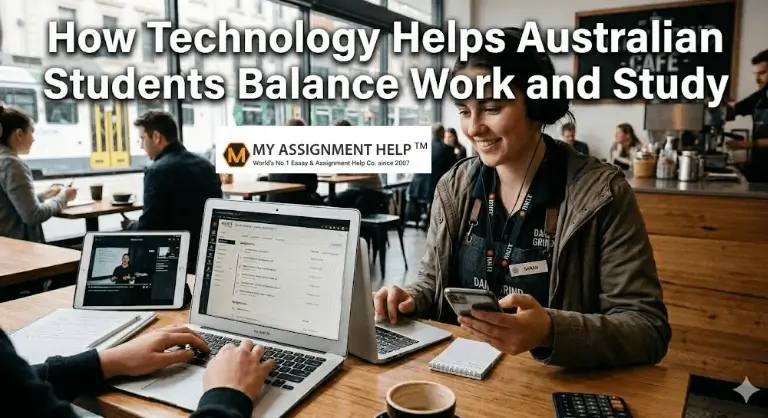
Fortunately, digital transformation has stepped in as a vital equalizer. From advanced automation and artificial intelligence to flexible digital learning platforms, technology is providing Australian students with the tools they need to master time management, access academic support when physical campuses are closed, and successfully navigate their demanding dual lives.
The Modern Student’s Dilemma: Juggling Work and University in Australia
For a high school student aiming for a competitive Australian Tertiary Admission Rank (ATAR) score, or a university undergraduate completing a demanding degree, time is the most precious and finite commodity available. A typical week involves attending mandatory lectures, participating in interactive tutorials, conducting primary research, completing rigorous assessments, and working 15 to 25 hours a week at a retail outlet, hospitality venue, or corporate internship.
When these structural responsibilities inevitably clash—such as an assignment deadline overlapping with an unexpected weekend shift—students face immense psychological and academic pressure. During these intense crunch periods, Myassignmenthelp often become essential lifelines, helping students manage their heavy workloads without sacrificing their mental well-being or grades.
Traditional educational structures, which require rigid face-to-face attendance, physical library access, and fixed consultation hours, frequently fail to accommodate the unpredictable, rotating schedules of casual workers. This is precisely where digital transformation alters the paradigm. Technology shifts the educational experience from a rigid, place-bound system into a fluid, hyper-personalized ecosystem that adapts to the student’s unique lifestyle.
1. Navigating Flexible and On-Demand Learning Ecosystems
The most profound structural shift in Australian education has been the widespread adoption of asynchronous and hybrid learning models. This transition has been accelerated by modern Learning Management Systems (LMS) like Canvas, Blackboard, and Moodle, which act as the digital backbone for institutions nationwide.
Lecture Capture and Virtual Classrooms
Gone are the days when missing a 9:00 AM lecture due to an unexpected morning shift meant falling weeks behind in a syllabus. Australian institutions now routinely deploy automated lecture-capture systems like Echo360 to record, transcribe, and archive academic presentations in real time.
Students can stream lectures during their morning train commute, listen at 1.5x speed to maximize time efficiency, or review complex technical definitions late at night after a retail closing shift. For students tackling highly technical disciplines, having access to these archives alongside targeted resources like civil engineering assignment help ensures that classroom instruction is no longer gatekept by a specific time or geographic location.
Micro-Credentials and Modular Courses
Educational technology (EdTech) platforms allow students to break their learning down into smaller, digestible components. Instead of sitting through an uninterrupted, three-hour block of dense theory, students can interact with modular quizzes, short video summaries, and mobile-friendly digital discussion boards during their lunch breaks at work. This micro-learning approach ensures continuous academic progression without requiring massive, uninterrupted blocks of free time, turning dead time into productive study windows.
2. Accessing Online Assignment Help and 24/7 Academic Support
One of the biggest pain points for working students is that their peak productivity hours rarely align with standard institutional operating hours. If a student finishes a demanding hospitality shift at 11:00 PM and finally sits down to write an essay due the next afternoon, university libraries, student centers, and professor offices are completely inaccessible.
Digital academic platforms bridge this critical gap, ensuring that help is always available regardless of the hour. Reliable, round-the-clock academic resources provide students with the lifelines they need exactly when they need them. When comprehensive research, structural editing, or complex technical problem-solving feels overwhelming under tight deadlines, turning to specialized external systems can make all the difference.
Dedicated platforms providing online assignment help in Australia, such as My Assignment Services, offer tailored, 24/7 academic assistance to Australian students navigating these exact pressures. Whether it’s decoding a complex engineering case study, understanding intricate nursing care plans, or mastering statistical analysis for a postgraduate business thesis, online academic guides provide high-quality, authentic reference materials and expert mentoring. This specialized external support acts as a safety valve, ensuring that students do not have to choose between keeping their paid shifts and achieving top-tier grades.
3. Implementing Intelligent Time Management and Productivity Tools
Balancing a rotating work roster with a complex matrix of academic deadlines requires military-grade organization. Casual work in Australia often relies on dynamic shift-scheduling software, making static paper diaries completely obsolete. Today’s most successful students lean heavily on intelligent productivity suites to map out their weeks dynamically.
Smart Calendars and Roster Integration
Using tools like Google Calendar or Microsoft Outlook, students can overlay their university timetables with work shifts exported directly from workplace management platforms like Deputy or Tanda.
Automated syncing ensures that if a store manager shifts a roster, the student receives an immediate cloud alert on their smartphone. This real-time visibility allows them to instantly reschedule tutorial slots, swap study blocks, or allocate alternative assignment drafting sessions before a time-management conflict turns into an academic crisis.
Task Customization and Visual Pipelines
Applications like Notion, Trello, and Asana allow students to treat their degrees like agile projects. By breaking down a massive, intimidating 3,000-word research essay into bite-sized, actionable tasks—such as “Literature Review,” “Drafting Introduction,” “Data Visualization,” and “Citation Check”—students can chip away at their academic milestones in 30-minute intervals between work duties. Visual pipelines show them exactly how far along an assignment is, reducing the mental friction of restarting a task after a long shift.
4. Leveraging AI-Powered Writing and Research Accelerators
The integration of Artificial Intelligence (AI) and Natural Language Processing (NLP) into everyday applications has fundamentally optimized how students conduct preliminary literature searches and refine their formal academic writing.
Streamlined Literature Searching
Traditionally, finding high-quality, peer-reviewed academic sources meant spending hours scouring complex university library databases. Today, AI-backed research tools like Semantic Scholar, Elicit, and Connected Papers allow students to input a specific research question and instantly receive synthesized summaries of the most relevant papers. This cuts down background literature search time from days to mere hours, allowing working students to bypass administrative friction and jump straight into critical analysis, drafting, and evaluation.
Advanced Editing and Proofreading
Writing clean, grammatically precise, and academically rigorous prose under strict time constraints is highly challenging, particularly when dealing with physical fatigue from work. Cloud-based assistants like Grammarly, Hemingway Editor, and integrated AI tools within Microsoft Word act as real-time copyeditors. They catch subtle grammatical errors, suggest advanced vocabulary enhancements, and ensure adherence to formal academic tones, helping students produce polished, professional drafts much faster.
5. Utilizing Cloud Collaboration and Mobile Workspaces
The lifestyle of the modern Australian student is defined by mobility. They study on the public bus network, draft essay introductions in retail staff breakrooms, and review digital flashcards while waiting for a client meeting to start. This frictionless lifestyle is made possible entirely by seamless cloud infrastructure.
The Borderless Workspace
Ecosystems like Google Workspace (Docs, Sheets, Drive) and Microsoft 365 ensure that a student’s work is constantly saved to the cloud and accessible across all form factors. A student can start a marketing report on their home desktop computer, read over it on their iPhone during their train commute, and make final edits on a tablet during a short break at their workplace. The catastrophic risk of losing work due to localized hardware failure is completely eliminated, and transition friction between “work mode” and “study mode” is reduced to zero.
Frictionless Asynchronous Group Work
Group assignments are notoriously disliked by working students because coordinating physical meeting times with four other individuals who also maintain distinct job commitments is nearly impossible.
Cloud collaboration tools solve this structural bottleneck entirely. Through dedicated communication channels like Slack or Microsoft Teams, alongside concurrent editing on live Google Docs, student groups can collaborate asynchronously. They can leave contextual comments, assign individual tasks, and build complex presentations together in real time without ever needing to step foot in the same physical room.
6. Embracing Financial Tech (FinTech) and the Gig Economy
Beyond direct academic platforms, consumer technology has fundamentally revolutionized how students earn, track, and manage money, offering flexibility that aligns with unpredictable academic calendars.
Shift Flexibility via the Gig Economy
Traditional part-time roles often require fixed, unyielding weekly availability that can become highly problematic during mid-semester exams. However, platforms powered by the modern gig economy—ranging from freelance digital design work on Upwork and Fiverr to flexible, independent tutoring via local Australian networks—allow students to scale their work hours up or down depending on their academic calendar. During quiet weeks, they can take on more freelancing gigs; during heavy assessment periods, they can pause their digital availability entirely to focus on their grades.
Real-Time Financial Tracking and Budgeting
Managing cash flow on a fluctuating student budget is a major source of cognitive load. Financial applications and modern digital banking apps in Australia (such as Up, CommBank, or Macquarie) provide instant spending categorization, predictive bill tracking, and automated savings buckets. By removing financial ambiguity and automating budget management, technology frees up valuable mental bandwidth, allowing students to focus more clearly on their employment tasks and academic goals.
Practical Success Strategies for Australian Students
While technology provides an incredible array of tools, digital assets are only as effective as the personal strategy behind their execution. For Australian high school and higher education students looking to maximize these digital ecosystems, several core strategies should be implemented:
- Audit Your Digital Stack: Don’t overwhelm yourself with dozens of redundant applications. Pick one robust calendar app, one note-taking or task manager (like Notion), and one secure cloud storage system, and use them consistently.
- Protect Deep Work Focus Blocks: Use distraction-blocking applications like Forest or Freedom during your designated study windows to ensure your limited free time is highly productive and free from workplace notifications.
- Communicate Early and Often: Use digital communication channels to keep both your workplace managers and your academic tutors updated if you anticipate roster clashes during major assessment periods or exam blocks.
- Leverage Trusted Support Systems: When the balance tips and workloads become temporarily unmanageable, do not hesitate to reach out for expert assistance via academic platforms to keep your academic progress on track.
See also: London Gold Centre: Mastering Precious Metals Investments in the UK
Frequently Asked Questions
Q.1 How many hours a week can an Australian student work without hurting their grades?
While there is no single answer, education experts generally recommend that full-time university or senior high school students limit employment to 15 to 20 hours per week. Working beyond 20 hours regularly correlates with a higher risk of academic burnout and a drop in overall marks unless a student utilizes strict time-management systems.
Q.2 What are the best free time-management apps for students in Australia?
For calendar mapping and roster integration, Google Calendar and Microsoft Outlook are completely free and highly efficient. For building assignment pipelines and organizing course notes, the free tier of Notion or Trello provides powerful agile workflows. To limit phone distractions during study sessions, Forest offers an excellent free version on mobile.
Q.3 Is it legal for my employer to change my shift roster at the last minute during exams?
In Australia, casual employee rosters are subject to modern awards governed by the Fair Work Ombudsman. While casual employment provides flexibility for both parties, sudden changes can be disruptive. It is vital to use workplace communication tools to block out your exam periods at least two to three weeks in advance so managers have ample time to fill your shifts.
Q.4 How does asynchronous learning help working students?
Asynchronous learning allows students to access instructional content—such as recorded lectures on Echo360, reading modules, and discussion boards on Canvas—on their own schedule rather than requiring live, face-to-face attendance. This means a student can work during traditional class hours and catch up on coursework early in the morning or late at night without missing critical material.
Conclusion
The classic, outdated image of the struggling student surviving on instant noodles and pulling highly stressful, all-night cramming sessions at a campus library is rapidly evolving. Thanks to the power of educational technology, cloud computing, intelligent automation, and on-demand academic assistance networks, Australian students are actively rewriting the script.
By effectively integrating these digital tools into their daily routines, students no longer have to view work and study as a zero-sum game where one must be sacrificed for the other. Instead, technology allows these two essential pillars of modern student life to coexist synergistically, helping the next generation of Australian professionals build rewarding careers while simultaneously achieving academic excellence.
About the Author – Drake Miller
I work as a dedicated academic content writer at Myassignment.services, creating informative and student-focused content for learners at various academic stages. My writing covers topics such as assignment support, study planning, research methods, and effective learning strategies. Through clear explanations and practical insights, I aim to help students improve their academic skills, stay organized, and overcome educational challenges with greater confidence throughout their academic journey.